

If you are building a SaaS product, one of the earliest architectural decisions you will make is also one of the hardest to reverse: how do you separate your customers’ data? That single choice shapes your infrastructure bill, your compliance story, your onboarding speed and how painful your database migrations will be three years from now.
This guide explains multi-tenant architecture in SaaS in plain English, then compares the three practical tenancy models (shared database, separate schema, isolated database) on cost, security, performance and operational effort. At the end you get a decision framework based on customer count, compliance requirements and expected growth, plus the questions we ask clients before recommending a model.
What Is Multi-Tenant Architecture in SaaS?
Multi-tenant architecture is a software design where a single running instance of an application serves multiple customers, called tenants. Each tenant shares the same codebase and often the same infrastructure, but sees only its own data, users and configuration.
The classic analogy is an apartment building. Everyone shares the foundation, plumbing, elevators and roof, which keeps costs low. Each tenant still gets a locked front door and cannot walk into a neighbour’s flat. Single-tenant architecture, by contrast, is a detached house: one customer, one dedicated instance, full control, much higher cost per occupant.
Tenant vs User: A Distinction That Matters
A tenant is usually a customer organisation (a company, a school district, a franchise). A user is a person inside that organisation. One tenant can contain hundreds of users. Almost every data model decision in a multi-tenant SaaS starts from this distinction, because your isolation boundary is drawn at the tenant level, not the user level.
Multi-Tenancy Is Not All or Nothing
A common misconception is that a product must be either fully shared or fully isolated. In reality, multi-tenancy exists on a spectrum, and the layers can be mixed:
- Application layer: shared app servers with a tenant context injected per request (most common)
- Data layer: shared tables, separate schemas, or separate databases
- Infrastructure layer: shared cluster, dedicated namespace, or dedicated deployment per tenant
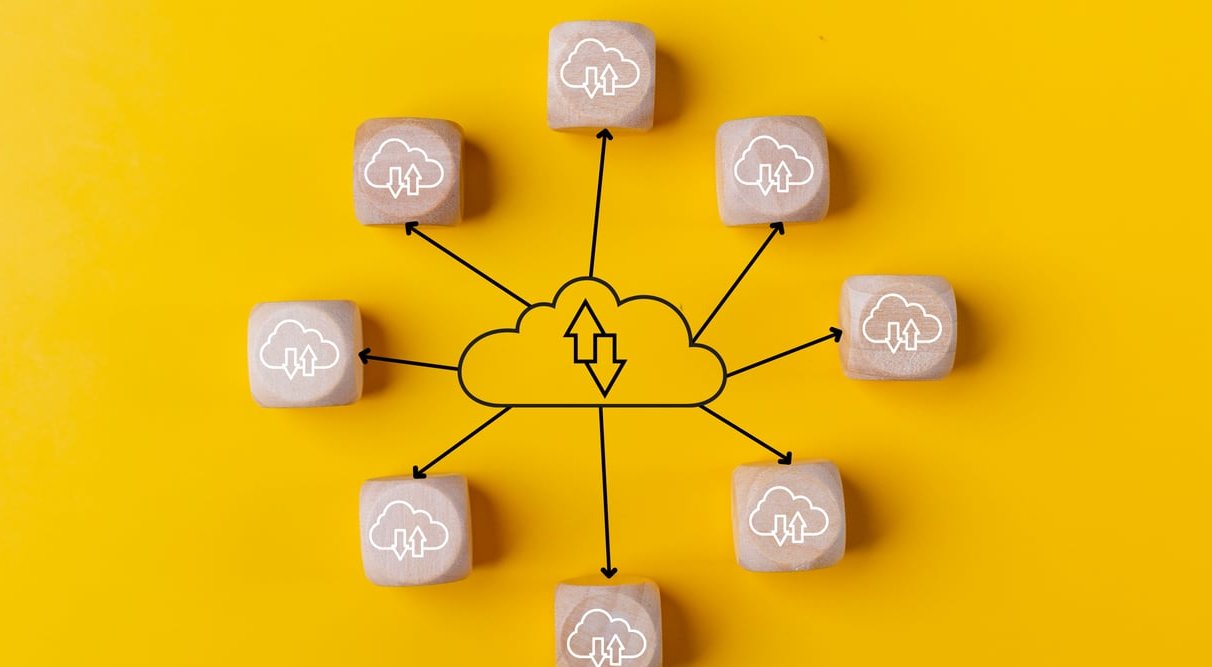
AWS calls the shared variant pooled and the dedicated variant siloed. Most mature SaaS products end up running a hybrid: pooled by default, siloed for the enterprise tier that pays for it.
Why Founders Choose Multi-Tenancy in the First Place
- Cost efficiency: one set of servers and one database cluster amortised across hundreds of accounts. Idle capacity for one tenant is usable by another.
- One codebase to maintain: you ship a fix once, and every customer has it. No version drift, no back-porting patches to 40 installs.
- Fast onboarding: a new tenant is a row in a table, not a provisioning pipeline. Self-serve signup becomes realistic.
- Aggregate insight: usage analytics, benchmarking features and capacity planning are far easier when data lives in one place.
- Cheaper scaling: you scale the platform, not each customer individually.
The trade-off is that isolation becomes a software responsibility rather than a physical one. A single missing WHERE tenant_id = ? can leak data across customers, which is why the data model choice deserves real attention. microsoft.com has a solid rundown on this.
The Three Multi-Tenant Database Models
1. Shared Database, Shared Schema (Pooled)
All tenants live in the same tables. Every tenant-owned row carries a tenant_id column, and every query filters on it. This is the model behind most high-volume, self-serve SaaS products.
How isolation is enforced
- A tenant context is resolved at the edge of the request (from subdomain, JWT claim or API key).
- The ORM or data access layer automatically applies a tenant filter to every query.
- The database enforces a second line of defence, typically row-level security in PostgreSQL, so a forgotten filter in application code cannot leak data.
- Composite indexes start with
tenant_idso query plans stay tenant-scoped and fast.
Strengths
- Lowest cost per tenant by a wide margin
- Instant provisioning, ideal for free trials and product-led growth
- One migration run updates every customer
- Handles thousands or tens of thousands of tenants comfortably
Weaknesses
- Highest blast radius if isolation logic fails
- Noisy neighbour risk: one heavy tenant can degrade query performance for everyone
- Per-tenant restore is genuinely hard (restoring one customer’s data from a shared backup requires custom tooling)
- Harder to satisfy customers who contractually demand physical data separation
2. Shared Database, Separate Schema (Bridge Model)
One database instance, but each tenant gets its own schema (PostgreSQL schemas, MySQL separate databases on the same server, SQL Server schemas). Tables are duplicated per tenant, so acme.invoices and globex.invoices coexist.
Strengths
- Clear logical separation that is easy to explain to a security reviewer
- Per-tenant backup and restore is straightforward
- Some per-tenant schema flexibility (custom fields or tables) without polluting a shared table
- Still shares compute, so cost sits between pooled and siloed
Weaknesses
- Migrations must run N times, and partial failures leave your fleet inconsistent
- Connection pooling gets complicated when each request may target a different schema
- Databases start to strain past a few hundred to a couple of thousand schemas (catalogue bloat, slow metadata queries, painful
pg_dumpoperations) - Cross-tenant reporting requires union queries or a separate analytics pipeline
3. Isolated Database per Tenant (Siloed)
Each tenant gets a dedicated database, and sometimes a dedicated application stack or even a dedicated region. This is the model for regulated industries and large enterprise contracts.
Strengths
- Strongest isolation, easiest compliance narrative (healthcare, finance, public sector, data residency)
- Per-tenant backup, restore, encryption keys and retention policy
- No noisy neighbour effect at the data layer
- Per-tenant performance tuning and scaling
- Data residency by region is simple: put the database where the contract requires
Weaknesses
- Highest cost per tenant, with a fixed floor even for small accounts
- Provisioning becomes an automated pipeline you must build and maintain
- Fleet-wide migrations, monitoring and version drift become a real operational discipline
- Self-serve signup is slower unless provisioning is fully automated
Side by Side Comparison
| Criteria | Shared Schema | Separate Schema | Isolated Database |
|---|---|---|---|
| Cost per tenant | Lowest | Medium | Highest |
| Data isolation | Logical, app and RLS enforced | Strong logical | Physical |
| Practical tenant ceiling | Tens of thousands+ | Hundreds to low thousands | Dozens to low hundreds without heavy automation |
| Migration effort | One run | One run per schema | Orchestrated fleet rollout |
| Per-tenant restore | Difficult, custom tooling | Straightforward | Trivial |
| Noisy neighbour risk | High | Medium | Low |
| Per-tenant customisation | Config and JSON fields only | Moderate | High |
| Cross-tenant analytics | Easy | Moderate | Requires ETL pipeline |
| Onboarding speed | Seconds | Seconds to minutes | Minutes to hours |
| Typical fit | Self-serve, SMB, product-led growth | Mid-market B2B | Regulated, enterprise, data residency |
How to Choose: A Practical Decision Framework
Ignore what is fashionable and answer four questions honestly. Related reading: The developer’s guide to SaaS multi-tenant architecture.
Question 1: How many tenants will you have in 24 months?
- Under 50 tenants, high contract value: isolated databases are affordable and give you a strong sales and compliance position.
- 50 to 500 tenants: separate schema or pooled with a siloed enterprise tier. Both work, so decide on compliance and customisation needs.
- Over 500 tenants, or self-serve signup: shared schema is the only model that stays economical and operationally sane.
Question 2: What does compliance actually require?
Read the requirement, do not assume it. GDPR, SOC 2 and ISO 27001 do not mandate a separate database per customer. They require appropriate access controls, encryption, auditability and the ability to delete a customer’s data on request. Logical isolation with row-level security, encryption at rest and solid audit logging satisfies most audits.
Where physical isolation genuinely becomes necessary:
- Contracts that explicitly state dedicated database or dedicated infrastructure
- Data residency rules that require records to stay in a specific country or region
- Customer-managed encryption keys (BYOK) per tenant
- Sectors where a regulator or client security team refuses shared storage outright
Question 3: How different are tenants from each other?
If tenants need custom tables, custom integrations or their own release cadence, shared schema will fight you constantly. If differences are mostly branding, feature flags and workflow settings, keep them in configuration and stay pooled.
Question 4: What is your team’s operational maturity?
Isolated databases only work if provisioning, migrations, monitoring and backups are fully automated. A two-person team running 80 databases by hand will spend its engineering budget on operations instead of product. Choose the model your team can actually operate on a bad day.
The Default Recommendation
- Start pooled (shared database, shared schema) with a mandatory
tenant_idand database-enforced row-level security from day one. - Build a tenant abstraction layer early so the location of a tenant’s data is a lookup, not a hardcoded assumption.
- Add a siloed tier later for enterprise deals that require it, and price it accordingly.
This hybrid path is what most successful SaaS products converge on. The key is designing for it from the beginning, because retrofitting a tenant routing layer into a mature codebase is expensive.
Building It Right: Implementation Essentials
Resolve Tenant Context at the Edge
Determine the tenant once, as early in the request lifecycle as possible, and make it immutable for the rest of the request. Common approaches:
- Subdomain:
acme.yourapp.com, clean and user friendly - Path prefix:
yourapp.com/acme/, easy to route with a CDN or gateway - JWT claim: the tenant is embedded in the token, ideal for APIs and mobile clients
Never derive the tenant from a user-supplied body parameter. That is the classic path to a cross-tenant data leak.
Defence in Depth for Data Isolation
- Application layer: a global query scope in your ORM that no developer can bypass accidentally
- Database layer: row-level security policies tied to a session variable holding the tenant ID
- Test layer: automated tests that attempt cross-tenant access and assert failure, running in CI on every commit
- Audit layer: log the tenant ID on every request and every data mutation
Control the Noisy Neighbour
- Per-tenant rate limits on API endpoints and background job queues
- Query timeouts and statement limits so one bad report cannot lock a table
- Separate worker pools for heavy asynchronous work such as exports and imports
- Read replicas for reporting workloads
- Per-tenant usage metrics so you spot the outlier before customers complain
Plan Backups Around Tenants, Not Just Servers
The question that catches teams out is not “can we restore the database” but “can we restore one customer to yesterday at 3pm without touching anyone else”. In a pooled model that requires soft deletes, tenant-scoped export tooling and change history. Build it before you need it.
Make Tenant Offboarding a Feature
Contracts and privacy law will eventually require you to export and then permanently delete a tenant. In pooled models this means cascading deletes across dozens of tables plus object storage, search indexes, caches, logs and analytics warehouses. Write it once as a tested, repeatable job.
Common Mistakes We See in Multi-Tenant SaaS Projects
- Adding tenant_id late. Retrofitting a tenant column across an existing schema and every query is one of the most expensive refactors in SaaS. Add it at the first table.
- Relying on application code alone. One forgotten filter equals a breach. Enforce isolation at the database level too.
- Choosing isolated databases for prestige. Ten customers and ten database instances with no automation is a slow-motion operations problem.
- Indexing without tenant_id first. Query plans degrade badly once your largest tenant is 100 times bigger than your median tenant.
- Ignoring tenant size skew. Plan for the customer who is 100x the average, because they will arrive.
- No tenant dimension in observability. If your dashboards cannot answer “which tenant caused this spike”, incident response takes hours instead of minutes.
- Hardcoding a single database connection. Even if you stay pooled forever, routing through a resolver keeps the door open for a siloed tier.
Migrating Between Models Later
Moving from pooled to siloed for a specific customer is achievable if you planned for it:
- Introduce a tenant registry that maps each tenant to a connection target.
- Route all data access through that registry rather than a static connection string.
- Copy the tenant’s data to the new database, then replicate changes until they are in sync.
- Flip the registry entry during a short maintenance window and verify.
- Remove the tenant’s rows from the pooled database after a safe retention period.
Going the other direction, from many isolated databases back to a pooled model, is far harder because of ID collisions and schema drift. This asymmetry is exactly why the pooled-first, silo-later path is usually the safer bet.

Multi-Tenant Architecture: Quick Reference by Scenario
| Scenario | Recommended model |
|---|---|
| Early stage product, self-serve signup, low ticket price | Shared database, shared schema with RLS |
| B2B mid-market, 100 to 500 clients, moderate customisation | Shared schema, or separate schema if per-tenant restore matters |
| Healthcare, finance or public sector data | Isolated database, optionally per region |
| Mixed customer base with a small number of large enterprise accounts | Hybrid: pooled by default, siloed premium tier |
| Strict data residency across several countries | Pooled per region, with a global tenant routing registry |
Frequently Asked Questions
What is a multi-tenant SaaS architecture?
It is an architecture where one instance of a SaaS application, along with its shared infrastructure, serves many customer organisations at once. Each tenant’s data and configuration are logically or physically separated, so no tenant can see another’s information, while everyone benefits from shared cost and a single codebase.
Is multi-tenancy good for SaaS?
For the large majority of SaaS products, yes. It lowers cost per customer, removes version drift, makes onboarding near instant and simplifies maintenance. The trade-off is that isolation has to be engineered and tested rather than assumed. Single-tenant deployments still make sense for a small number of high-value, heavily regulated or deeply customised customers.
What is an example of a multi-tenant architecture?
Mainstream business tools such as CRM, helpdesk, project management and e-commerce platforms are typically multi-tenant. A single deployment serves thousands of companies, each reaching the product through its own subdomain or workspace, with data separated by a tenant identifier and access rules enforced in both the application and the database.
How do you build a multi-tenant SaaS application?
In short: add a tenant identifier to every tenant-owned table from the very first migration, resolve the tenant context at the edge of each request, enforce isolation in both application code and the database, add tenant-aware rate limiting and observability, automate tenant provisioning and offboarding, and route data access through a tenant registry so you can move individual tenants to dedicated infrastructure later.
Does GDPR require a separate database for each customer?
No. GDPR requires appropriate technical and organisational measures, including access control, encryption, auditability and the ability to export or erase personal data. A well-designed pooled architecture with row-level security and tenant-scoped deletion routines can meet those obligations. Dedicated databases become necessary when a specific contract, regulator or residency rule demands them.
How many tenants can a shared database handle?
With good indexing, partitioning of the largest tables and read replicas for reporting, a single well-tuned relational database can serve tens of thousands of tenants. The practical limit is usually driven by total data volume and the size of your largest tenants rather than the tenant count itself.
What is the difference between multi-tenant and multi-instance?
Multi-tenant means one running application instance serves many customers. Multi-instance means each customer gets their own deployment of the application, often with its own database and its own release schedule. Multi-instance offers maximum isolation and customisation but multiplies operating costs and maintenance work.
Final Thoughts
There is no universally correct tenancy model, only the one that matches your customer profile, compliance obligations and operational capacity. The costliest mistake is not picking the wrong model, it is building as if the question will never come up again. Add the tenant identifier early, enforce isolation in depth, route data access through an abstraction you control, and you keep every future option open.
If you are designing a new SaaS platform or reviewing the tenancy model of an existing one, our team at designandtech.net can help you assess the trade-offs, model the cost per tenant and build an architecture that scales with your roadmap. Get in touch to start the conversation.